
ASIAN AMERICAN COMMUNITY FELLOWSHIP REFLECTION: GRACE HERZOG
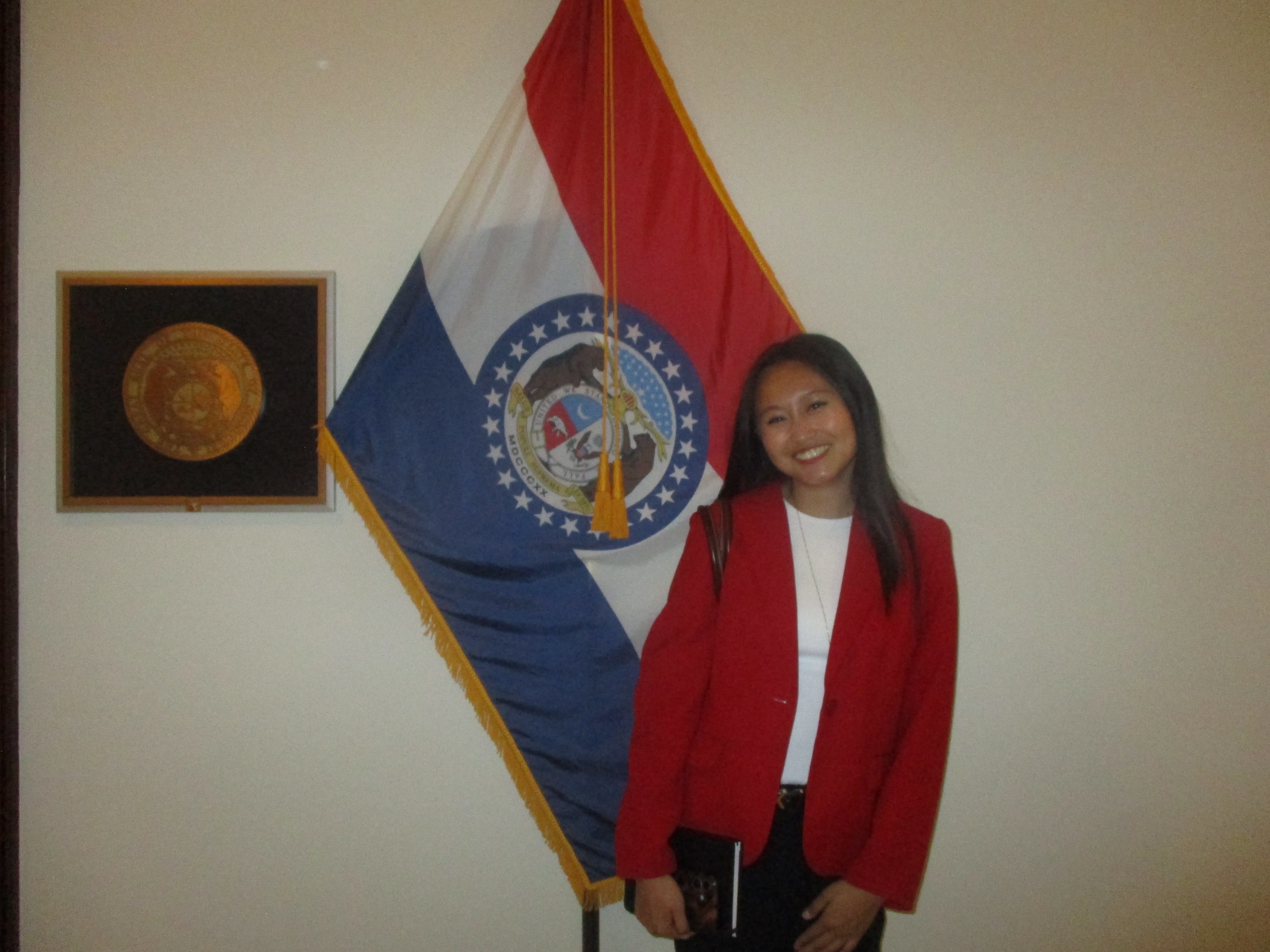 ASIAN AMERICAN STUDIES COMMUNITY FELLOWSHIP REFLECTION
By Grace Herzog
Summer 2026
On June 30, 2026, the day Trump v. Barbara, otherwise known as the birthright citizenship case, was announced by the Supreme Court, the staff at the Congressional Asian Pacific American Caucus (CAPAC) and I waited patiently at our desks, staring at the SCOTUS Blog Live Chat for an update. I had just joined the staff a week and a half ago, and this moment was something they’d been waiting for for months. The Caucus, chaired by Congresswoman Grace Meng (NY-06) and made up of numerous other members in Congress who gained their right to citizenship thanks to the principle of birthright citizenship, had a vested interest in this cause. The office did, too. Some were birthright citizens, and all of us knew someone who would be personally affected by the case. We were also all members of the AANHPI community, a group of people who have been excluded from America’s history. Prior to the decision announcement, I had drafted two statements: one on if birthright citizenship was upheld and the other for if it was taken down. Writing the reversal statement took two days, and it was something I personally hoped would never be read by anyone.
I first heard the news when I heard my coworker in CAPAC’s screams of joy. Birthright citizenship was upheld in the United States. We celebrated with high fives, teary eyes, and the personal relief that our reversal draft would never be read. 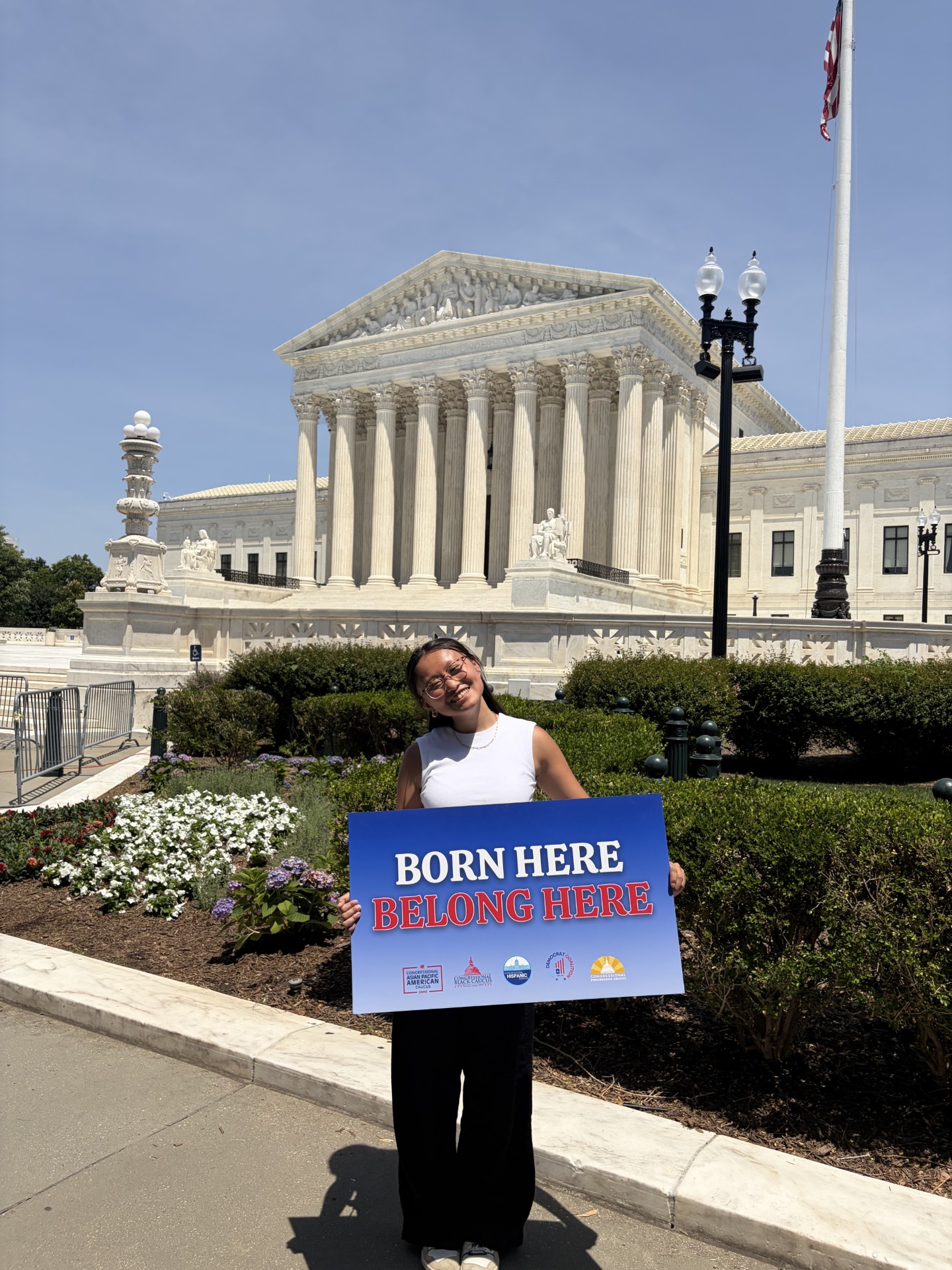
What followed was a Tri-Caucus press conference, which I had the opportunity to record, edit and post on CAPAC’s social media channels. I had once dreamed of working on Capitol Hill, but seeing politicians in front of my eyes announce something so personal to so many in the United States instilled a deep appreciation for my job this summer. Hearing Grace Meng, a Taiwanese American and a birthright citizen herself, tell the world “if you’re born here, you belong here” was a powerful statement that I will remember for the rest of my life.
As the press intern for the Congressional Asian Pacific American Caucus, my work days were filled with drafting tweets, getting first pen on press releases and assisting in interviews with members of CAPAC for their “Spill the Tea” segments on social media. I worked alongside three other staffers and one fellow, all of whom have personal passion for AANHPI causes. CAPAC’s own policy agenda contains causes I am personally very passionate about: ensuring all Asian Americans and Pacific Islanders are able to vote barrier-free, have access to affordable healthcare, food assistance and more, and promote the inclusion of AANHPI history in museums. These causes served as a guiding moral standard for everyone who worked in the CAPAC office and for the 86 members of Congress who claimed membership.
Through my job, I gained a comprehensive look at what working in Congress looks like, along with how AANHPI interests are being elevated to include the full diaspora of people it represents. From advocating for Sikh truck drivers over social media to highlighting Pacific Islander efforts to combat rising oceans, I gained a broader understanding of the diverse strengths and cultures that define the AANHPI community. I also honed in on writing in a specific voice to cater to different audiences. I drafted newsletters, showcasing efforts CAPAC members were doing to provide assistance and support to AANHPI communities in their districts. And I made social toolkits to provide information about AANHPI holidays and important dates, distributed to each member’s office. 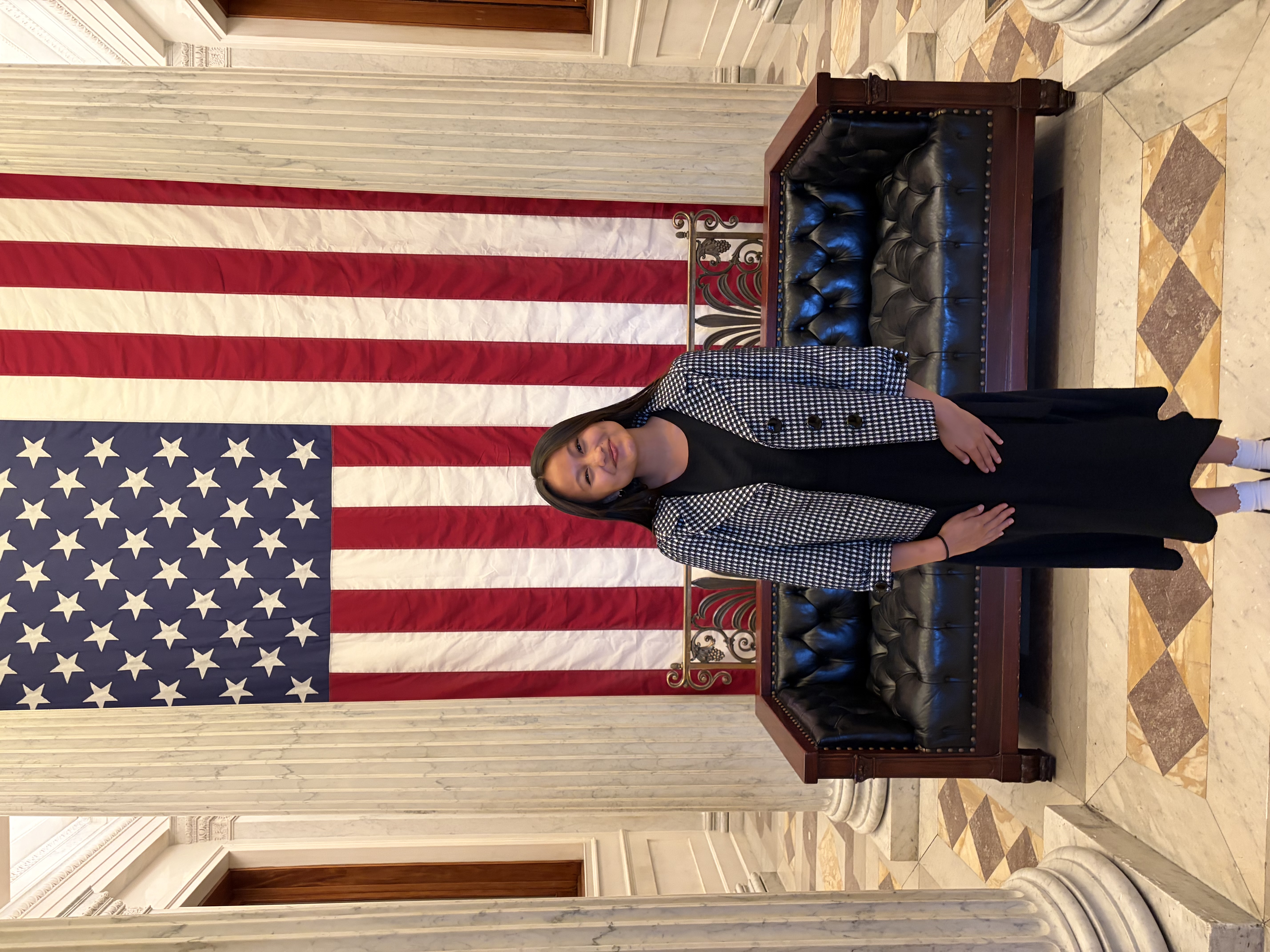
Another stand out moment to me was America’s 250th birthday. I came to the Hill at a time when politics, and some would argue democracy, are at an all time low. Much of these sentiments, it seemed, culminated in the environment of Washington D.C. on the nation’s birthday, July 4. I was asked to take the first pen at Chair Meng’s op-ed to be released after. I was told to make it punchy and emphasize the point that a core value of the United States is accepting immigrants — in knowing that the countless cultures represented in our nation is what makes it strong. Writing this op-ed was both an honor and a challenge. I found it so difficult to properly capture people’s frustrations and insistence that everyone belong. Additionally, I have never been so challenged on the syntax of my writing — every word I used was challenged, many sections were revised, and I was pushed to identify the very crux of my argument and make it shine. Nonetheless, it was revised, edited and published. It was incredibly rewarding to see it published, and I am so thankful for the sincere editing and thus learning process I went through.
This internship will be one I look back on fondly and credit with expanding my writing abilities, passion for policy, and understanding of the broad array of people and cultures which make up the AANHPI community. I’m looking forward to taking these lessons with me as I finish my last year at Northwestern and beyond.